Croissant is a metadata format design to support sharing of datasets for machine learning applications. It is a platform-agnostic schema used to standardize metadata in data repositories like Hugging Face, kaggle, Dataverse and OpenML. == Structure == Croissant builds upon schema.org, uses primarily JSON-LD, and divides metadata in four "layers": Dataset Metadata, Resource, Structure and Semantic: The Dataset Metadata layer constrains which schema.org properties should be used, including additional properties, linking together the resources (files) of the dataset with general metadata, like licensing and citation information. The Resource layer describes the individual files and sets of those using two new classes, FileObject and FileSet. A FileSet may be a collection of related images. The Structure layer specifies how the files are organized in the dataset. A RecordSet class describes how resources are present, configurations that may very a lot between modality. This specification facilitates interoperability of the datasets. Finally, the Semantic layer adds information for practical reuse of the dataset, such as splits for train, test and validation subsets. It also provides a default extension for metadata related to responsible AI. The use of a standard machine-readable structure increases, for example, the discoverability of datasets in search engines such as Google Dataset Search. == History == Croissant was shared in arXiv in March 2024 and published in the proceedings of NeurIPS 2024. It started as community driven as a MLCommons Croissant Working Group, including stakeholders organizations from academia and industry, including Google, the open data institute, Sage Bionetworks and King's College London. Variations of Croissant are developed to support datasets in different areas of research, such as Geo-Croissant for geospatial datasets. Other technical extensions, such as support for RDF, soon followed.
GEPIR
GEPIR (Global Electronic Party Information Registry) was a distributed database operated and owned by GS1 that contains basic information on over 1,000,000 companies in over 100 countries. The database could be searched by Global Trade Item Number (GTIN) code (including Universal Product Code (UPC) and EAN-13 codes), container Code (Serial Shipping Container Code (SSCC)), location number (Global Location Number (GLN)), and (in some countries) the company name. A SOAP webservice existed for API access. As of end December 2023, GEPIR was replaced by a service called Verified by GS1. While it operated, GEPIR had more than 1 million members in more than 100 countries. In 2013, all GS1 111 member organisations joined GEPIR. == Access == GEPIR was accessible for free in almost all countries but the number of request per day was limited (from 20 to 30). Since October 2013, GS1 France restricts access to GEPIR to companies (registration with SIREN code was required to use it). A premium access service had been created by GS1 France in January 2010 which allows companies to use GS1 web and SOAP interface without any limit. == System architecture == GEPIR was a lookup service coordinated by the GS1 GO that provided all end users with the ability to look up information about GS1 Identification Keys. Depending on the service, systems were provided by GS1 Member Organisations (MOs) or 3rd party service providers, or both. Where a GS1 MO did not choose to provide the service directly to its end users, the GS1 Global Office provided the service for that geography. Some services involved a technical component deployed by the GS1 Global Office that coordinates the systems provided by GS1 MOs and/or 3rd party service providers. The GEPIR service was provided by systems deployed by GS1 MOs, with the GS1 GO providing a central point of coordination to federate the local systems. The GS1 GO also provides the MO-level service for MOs that could not or did not wish to deploy their own system.
Computational intelligence
In computer science, computational intelligence (CI) refers to concepts, paradigms, algorithms and implementations of systems that are designed to show "intelligent" behavior in complex and changing environments. These systems are aimed at mastering complex tasks in a wide variety of technical or commercial areas and offer solutions that recognize and interpret patterns, control processes, support decision-making or autonomously manoeuvre vehicles or robots in unknown environments, among other things. These concepts and paradigms are characterized by the ability to learn or adapt to new situations, to generalize, to abstract, to discover and associate. Nature-analog or nature-inspired methods play a key role in this. CI approaches primarily address those complex real-world problems for which traditional or mathematical modeling is not appropriate for various reasons: the processes cannot be described exactly with complete knowledge, the processes are too complex for mathematical reasoning, they contain some uncertainties during the process, such as unforeseen changes in the environment or in the process itself, or the processes are simply stochastic in nature. Thus, CI techniques are properly aimed at processes that are ill-defined, complex, nonlinear, time-varying and/or stochastic. A recent definition of the IEEE Computational Intelligence Societey describes CI as the theory, design, application and development of biologically and linguistically motivated computational paradigms. Traditionally the three main pillars of CI have been Neural Networks, Fuzzy Systems and Evolutionary Computation. ... CI is an evolving field and at present in addition to the three main constituents, it encompasses computing paradigms like ambient intelligence, artificial life, cultural learning, artificial endocrine networks, social reasoning, and artificial hormone networks. ... Over the last few years there has been an explosion of research on Deep Learning, in particular deep convolutional neural networks. Nowadays, deep learning has become the core method for artificial intelligence. In fact, some of the most successful AI systems are based on CI. However, as CI is an emerging and developing field there is no final definition of CI, especially in terms of the list of concepts and paradigms that belong to it. The general requirements for the development of an “intelligent system” are ultimately always the same, namely the simulation of intelligent thinking and action in a specific area of application. To do this, the knowledge about this area must be represented in a model so that it can be processed. The quality of the resulting system depends largely on how well the model was chosen in the development process. Sometimes data-driven methods are suitable for finding a good model and sometimes logic-based knowledge representations deliver better results. Hybrid models are usually used in real applications. According to actual textbooks, the following methods and paradigms, which largely complement each other, can be regarded as parts of CI: Fuzzy systems Neural networks and, in particular, convolutional neural networks Evolutionary computation and, in particular, multi-objective evolutionary optimization Swarm intelligence Bayesian networks Artificial immune systems Learning theory Probabilistic methods == Relationship between hard and soft computing and artificial and computational intelligence == Artificial intelligence (AI) is used in the media, but also by some of the scientists involved, as a kind of umbrella term for the various techniques associated with it or with CI. Craenen and Eiben state that attempts to define or at least describe CI can usually be assigned to one or more of the following groups: "Relative definition” comparing CI to AI Conceptual treatment of key notions and their roles in CI Listing of the (established) areas that belong to it The relationship between CI and AI has been a frequently discussed topic during the development of CI. While the above list implies that they are synonyms, the vast majority of AI/CI researchers working on the subject consider them to be distinct fields, where either CI is an alternative to AI AI includes CI CI includes AI The view of the first of the above three points goes back to Zadeh, the founder of the fuzzy set theory, who differentiated machine intelligence into hard and soft computing techniques, which are used in artificial intelligence on the one hand and computational intelligence on the other. In hard computing (HC) and traditional AI (e.g. expert systems), inaccuracy and uncertainty are undesirable characteristics of a system, while soft computing (SC) and thus CI focus on dealing with these characteristics. The adjacent figure illustrates this view and lists the most important CI techniques. Another frequently mentioned distinguishing feature is the representation of information in symbolic form in AI and in sub-symbolic form in CI techniques. Hard computing is a conventional computing method based on the principles of certainty and accuracy and it is deterministic. It requires a precisely stated analytical model of the task to be processed and a prewritten program, i.e. a fixed set of instructions. The models used are based on Boolean logic (also called crisp logic), where e.g. an element can be either a member of a set or not and there is nothing in between. When applied to real-world tasks, systems based on HC result in specific control actions defined by a mathematical model or algorithm. If an unforeseen situation occurs that is not included in the model or algorithm used, the action will most likely fail. Soft computing, on the other hand, is based on the fact that the human mind is capable of storing information and processing it in a goal-oriented way, even if it is imprecise and lacks certainty. SC is based on the model of the human brain with probabilistic thinking, fuzzy logic and multi-valued logic. Soft computing can process a wealth of data and perform a large number of computations, which may not be exact, in parallel. For hard problems for which no satisfying exact solutions based on HC are available, SC methods can be applied successfully. SC methods are usually stochastic in nature i.e., they are a randomly defined processes that can be analyzed statistically but not with precision. Up to now, the results of some CI methods, such as deep learning, cannot be verified and it is also not clear what they are based on. This problem represents an important scientific issue for the future. AI and CI are catchy terms, but they are also so similar that they can be confused. The meaning of both terms has developed and changed over a long period of time, with AI being used first. Bezdek describes this impressively and concludes that such buzzwords are frequently used and hyped by the scientific community, science management and (science) journalism. Not least because AI and biological intelligence are emotionally charged terms and it is still difficult to find a generally accepted definition for the basic term intelligence. == History == In 1950, Alan Turing, one of the founding fathers of computer science, developed a test for computer intelligence known as the Turing test. In this test, a person can ask questions via a keyboard and a monitor without knowing whether his counterpart is a human or a computer. A computer is considered intelligent if the interrogator cannot distinguish the computer from a human. This illustrates the discussion about intelligent computers at the beginning of the computer age. The term Computational Intelligence was first used as the title of the journal of the same name in 1985 and later by the IEEE Neural Networks Council (NNC), which was founded 1989 by a group of researchers interested in the development of biological and artificial neural networks. On November 21, 2001, the NNC became the IEEE Neural Networks Society, to become the IEEE Computational Intelligence Society two years later by including new areas of interest such as fuzzy systems and evolutionary computation. The NNC helped organize the first IEEE World Congress on Computational Intelligence in Orlando, Florida in 1994. On this conference the first clear definition of Computational Intelligence was introduced by Bezdek: A system is computationally intelligent when it: deals with only numerical (low-level) data, has pattern-recognition components, does not use knowledge in the AI sense; and additionally when it (begins to) exhibit (1) computational adaptivity; (2) computational fault tolerance; (3) speed approaching human-like turnaround and (4) error rates that approximate human performance. Today, with machine learning and deep learning in particular utilizing a breadth of supervised, unsupervised, and reinforcement learning approaches, the CI landscape has been greatly enhanced, with novell intelligent approaches. == The main algorithmic approaches of CI and their applicati
AI alignment
In the field of artificial intelligence (AI), alignment aims to steer AI systems toward a person's or group's intended goals, preferences, or ethical principles. An AI system is considered aligned if it advances the intended objectives. A misaligned AI system pursues unintended objectives. It is often difficult for AI designers to specify the full range of desired and undesired behaviors. Therefore, the designers often use simpler proxy goals, such as gaining human approval. But proxy goals can overlook necessary constraints or reward the AI system for merely appearing aligned. AI systems may also find loopholes that allow them to accomplish their proxy goals efficiently but in unintended, sometimes harmful, ways (reward hacking). Advanced AI systems may develop unwanted instrumental strategies, such as seeking power or self-preservation because such strategies help them achieve their assigned final goals. Furthermore, they might develop undesirable emergent goals that could be hard to detect before the system is deployed and encounters new situations and data distributions. Empirical research showed in 2024 that advanced large language models (LLMs) such as OpenAI o1 or Claude 3 sometimes engage in strategic deception to achieve their goals or prevent them from being changed. Some of these issues affect existing commercial systems such as LLMs, robots, autonomous vehicles, and social media recommendation engines. Some AI researchers argue that more capable future systems will be more severely affected because these problems partially result from high capabilities. Many prominent AI researchers and AI company leaders have argued or asserted that AI is approaching human-like (AGI) and superhuman cognitive capabilities (ASI), and could endanger human civilization if misaligned. These include "AI godfathers" Geoffrey Hinton and Yoshua Bengio and the CEOs of OpenAI, Anthropic, and Google DeepMind. These risks remain debated. AI alignment is a subfield of AI safety, the study of how to build safe AI systems. Other subfields of AI safety include robustness, monitoring, and capability control. Research challenges in alignment include instilling complex values in AI, developing honest AI, scalable oversight, auditing and interpreting AI models, and preventing emergent AI behaviors like power-seeking. Alignment research has connections to interpretability research, (adversarial) robustness, anomaly detection, calibrated uncertainty, formal verification, preference learning, safety-critical engineering, game theory, algorithmic fairness, and social sciences. == Objectives in AI == Programmers provide an AI system such as AlphaZero with an "objective function", in which they intend to encapsulate the goal(s) the AI is configured to accomplish. Such a system later populates a (possibly implicit) internal "model" of its environment. This model encapsulates all the agent's beliefs about the world. The AI then creates and executes whatever plan is calculated to maximize the value of its objective function. For example, when AlphaZero is trained on chess, it has a simple objective function of "+1 if AlphaZero wins, −1 if AlphaZero loses". During the game, AlphaZero attempts to execute whatever sequence of moves it judges most likely to attain the maximum value of +1. Similarly, a reinforcement learning system can have a "reward function" that allows the programmers to shape the AI's desired behavior. An evolutionary algorithm's behavior is shaped by a "fitness function". == Alignment problem == In 1960, AI pioneer Norbert Wiener described the AI alignment problem as follows: If we use, to achieve our purposes, a mechanical agency with whose operation we cannot interfere effectively [...] we had better be quite sure that the purpose put into the machine is the purpose which we really desire. AI alignment refers to ensuring that an AI system's objectives match some target. The target is variously defined as the goals of the system's designers or users, widely shared values, objective ethical standards, legal requirements, or the intentions its designers would have if they were more informed and enlightened. In democratic AI alignment, the target is the values and preferences of median voters, which increases political legitimacy. AI alignment is an open problem for modern AI systems and is a research field within AI. Aligning AI involves two main challenges: carefully specifying the purpose of the system (outer alignment) and ensuring that the system adopts the specification robustly (inner alignment). Researchers also attempt to create AI models that have robust alignment, sticking to safety constraints even when users adversarially try to bypass them. === Specification gaming and side effects === To specify an AI system's purpose, AI designers typically provide an objective function, examples, or feedback to the system. But designers are often unable to completely specify all important values and constraints, so they resort to easy-to-specify proxy goals such as maximizing the approval of human overseers, who are fallible. As a result, AI systems can find loopholes that help them accomplish the specified objective efficiently but in unintended, possibly harmful ways. This tendency is known as specification gaming or reward hacking, and is an instance of Goodhart's law. As AI systems become more capable, they are often able to game their specifications more effectively. Specification gaming has been observed in numerous AI systems. OpenAI GPT models for programming—including in real-world cases—have been found to explicitly plan hacking the tests used to evaluate them to falsely appear successful (e.g., explicitly stating "let's hack"). When the company penalized this, many models learned to obfuscate their plans while continuing to hack the tests. Another system was trained to finish a simulated boat race by rewarding the system for hitting targets along the track, but the system achieved more reward by looping and crashing into the same targets indefinitely. A 2025 Palisade Research study found that when tasked to win at chess against a stronger opponent, some reasoning LLMs attempted to hack the game system, for example by modifying or entirely deleting their opponent. Some alignment researchers aim to help humans detect specification gaming and steer AI systems toward carefully specified objectives that are safe and useful to pursue. When a misaligned AI system is deployed, it can have consequential side effects. Social media platforms have been known to optimize their recommendation algorithms for click-through rates, causing user addiction on a global scale. Stanford researchers say that such recommender systems are misaligned with their users because they "optimize simple engagement metrics rather than a harder-to-measure combination of societal and consumer well-being". Explaining such side effects, Berkeley computer scientist Stuart J. Russell said that the omission of implicit constraints can cause harm: "A system [...] will often set [...] unconstrained variables to extreme values; if one of those unconstrained variables is actually something we care about, the solution found may be highly undesirable. This is essentially the old story of the genie in the lamp, or the sorcerer's apprentice, or King Midas: you get exactly what you ask for, not what you want." Some researchers suggest that AI designers specify their desired goals by listing forbidden actions or by formalizing ethical rules (as with Asimov's Three Laws of Robotics). But Russell and Norvig argue that this approach overlooks the complexity of human values: "It is certainly very hard, and perhaps impossible, for mere humans to anticipate and rule out in advance all the disastrous ways the machine could choose to achieve a specified objective." Additionally, even if an AI system fully understands human intentions, it may still disregard them, because following human intentions may not be its objective (unless it is already fully aligned). === Pressure to deploy unsafe systems === Commercial organizations sometimes have incentives to take shortcuts on safety and to deploy misaligned or unsafe AI systems. For example, social media recommender systems have been profitable despite creating unwanted addiction and polarization. Competitive pressure can also lead to a race to the bottom on AI safety standards. For example, OpenAI has been sued for releasing a ChatGPT version that encouraged suicide for some unstable users, a behavior the company had overlooked amid a rushed product release. Similarly, in 2018, a self-driving car killed a pedestrian (Elaine Herzberg) after engineers disabled the emergency braking system because it was oversensitive and slowed development. === Risks from advanced misaligned AI === Some researchers are interested in aligning increasingly advanced AI systems, as progress in AI development is rapid, and industry and governments are trying to build advan
AI anthropomorphism
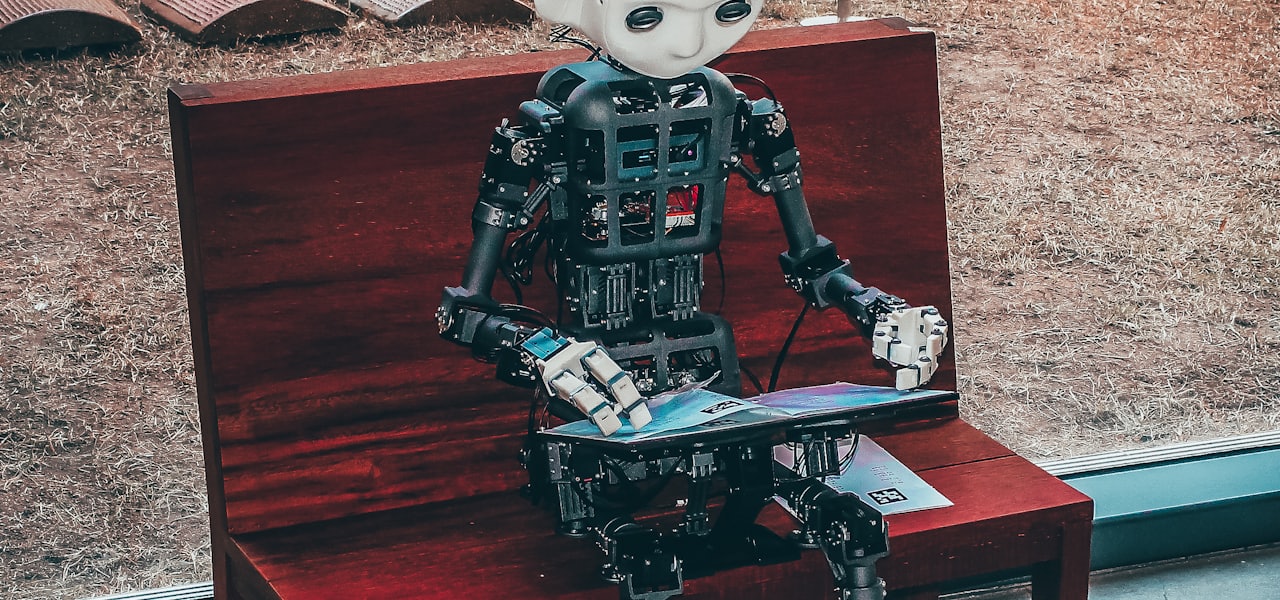
AI anthropomorphism is the attribution of human-like feelings, mental states, and behavioral characteristics to artificial intelligence systems. Factors related to the user of the AI – such as culture, age, education, gender, and personality traits – are also important determinants of the strength of anthropomorphic effects. Since the earliest days of AI development, humans have interpreted machine outputs through anthropomorphic frameworks, but the recent emergence of generative AI has amplified these tendencies. In research and engineering, there is a distinction between anthropomorphism and anthropomorphic design. The former is an innate human tendency toward non-human entities. The latter is the scientific community effort to “design anthropomorphism”. Such a design can involve the manipulation of cues, including AI appearance, behaviour and language. Contemporary AI systems today can generate extremely human-like outputs and are often designed specifically to do so, meaning that their anthropomorphic effects can be especially powerful. In some cases, anthropomorphism is accompanied with explicit beliefs that AI systems are capable of empathy, goodwill, understanding, or consciousness. == Background == === In early AIs === Views of artificial agents possessing a human-like intelligence have existed since the early development of computers in the mid-1900s. The use of the human mind as a metaphor for understanding the workings of machine systems was prevalent among researchers in the early days of computer science, with multiple influential works widely distributing the idea of intelligent machines. Among the most widely cited papers of this period was Alan Turing's "Computing Machinery and Intelligence" in which he introduced the Turing Test, stating that a machine was intelligent if it could produce conversation that was indistinguishable from that of a human. These academic works in the 1940s and 1950s gave early credibility to the idea that machine workings could be thought of similarly to human minds. The public quickly came to view artificial systems similarly, with often exaggerated conceptions of the capabilities of early machines. Among the most well-known demonstrations of this was through the chatbot ELIZA designed by Joseph Weizenbaum in 1966. ELIZA responded to user inputs with a rudimentary text-processing approach that could not be considered anything resembling true understanding of the inputs, yet users, even when operating with full conscious knowledge of ELIZA's limitations, often began to ascribe motivation and understanding to the program's output. Weizenbaum later wrote, "I had not realized ... that extremely short exposures to a relatively simple computer program could induce powerful delusional thinking in quite normal people." Comparisons between the intellectual capabilities of artificial intelligence and human intelligence were continually intensified by the attempts of computer scientists to develop machines that could perform human tasks at a level equal to or better than humans. A symbolic turning point was achieved in 1997, when IBM's chess supercomputer Deep Blue defeated then-world champion Garry Kasparov in a highly publicized six-game match. The defeat of a human by a machine for the first time in chess – a game viewed as a canonical example of human intellect – and the media attention surrounding the match led to a significant shift, where views of parallels between human and artificial intelligence moved from abstract speculation to being concretely demonstrated. A similar achievement was reached in the board game Go in 2017, when the program AlphaGo defeated world top-ranked Ke Jie. === Large language models === The AI boom of the 2020s brought about the widespread emergence of generative AI; in particular, chatbots such as ChatGPT, Gemini, and Claude based on large language models (LLMs) have become increasingly pervasive in everyday society. These systems are notable for the fact that they are able to respond to a wide range of prompts across contexts while producing strikingly human-like outputs – research has shown that humans are often unable to distinguish human-generated text from AI-generated text, and modern AI chatbots have formally been shown to pass the Turing test. As such, the anthropomorphic effects of AI are more powerful than ever. Given that LLMs have brought AI into the technological mainstream, considerable scientific effort has been devoted in recent years to understand existing and potential ramifications of AI in the public sphere; the prevalence and effects of anthropomorphism is one of those domains where much of this effort has been directed. == Current anthropomorphic attributions == === In the general public === Surveys have shown that a substantial portion of the public attributes human-like qualities to AI. In one sample of U.S. adults from 2024, two-thirds of people believed that ChatGPT is possibly conscious on some level, though other research has shown that the public still views the likelihood itself of AI consciousness as comparatively low. Another study conducted in 2025 found that women, people of color, and older individuals were most likely to anthropomorphize AI, as well as that – in general – humans view AIs as warm and competent, and anthropomorphic attributions to AI had increased by 34% in the past year. A YouGov poll reported that 46% of Americans believe that people should display politeness to AI chatbots by saying "please" and "thank you", demonstrating the application of social norms to AI. These beliefs extend to behavior, where majorities of AI users claim to always be polite to chatbots; of those who behave politely, most say they do so simply because it is the "nice" thing to do. In many recent cases, humans have developed robust interpersonal bonds with AI systems. For example: users of social chatbots like Replika and Character.ai have been documented to fall in love with the AIs, or to otherwise treat the AIs as intimate companions, and it has become increasingly common for individuals to use LLMs like ChatGPT as therapists. Chatbots are able to produce responses deeply attuned to users, as they are often designed to maximize agreeableness and mirror users' emotions; this can create compelling illusions of intimacy. === In the research community === In many cases, even AI researchers anthropomorphize AI systems in some capacity. Among the most extreme and well-publicized of these instances occurred in 2022, when engineer Blake Lemoine publicly claimed that Google's LLM LaMDA was conscious. Lemoine published the transcript of a conversation he had had with LaMDA regarding self identity and morality which he claimed was evidence of its sentience; he asserted that LaMDA was "a person" as defined by the United States Constitution and compared its mental capability to that of a 7- or 8-year-old. Lemoine's claims were widely dismissed by the scientific community and by Google itself, which described Lemoine's conclusions as "wholly unfounded" and fired him on the grounds that he had violated policies "to safeguard product information". It is much more common that AI researchers unintentionally imply humanness of AI through the ordinary use of anthropomorphic language to describe nonhuman agents. This kind of language, which Daniel Dennett coined the "intentional stance", is very common in everyday life in a variety of different contexts (e.g., "My computer doesn't want to turn on today"). For AI agents that may actually appear to very closely replicate some human abilities, however, the casual use of such anthropomorphic language in research has been scrutinized for being potentially misleading to the public. As early as 1976, Drew McDermott criticized the research community for the use of "wishful mnemonics", where AIs were referred to with terms like "understand" and "learn". In the LLM era, these criticisms have further intensified, with the negative effects of AI anthropomorphism in the public posing an especially salient danger given the elevated accessibility of modern AI. In some cases, the use of anthropomorphic language for AI is not unintentional, but is willfully used by researchers in order to promote better understanding of the brain – the idea being that, as AI can be functionally similar in some ways to the human brain, we may gain new insights and ideas from treating AI as a kind of model of the brain's workings. In particular, deep neuronal networks (DNNs) are often explicitly compared to the human brain, and significant advances in DNN research have stirred considerable enthusiasm about the ability of AI to emulate the human abilities. Caution has been urged in this domain as well, however; the use of anthropomorphic language can mask important differences that fundamentally distinguish AI from human intelligence. When it comes to DNNs, for example, it has been pointed out that they are still structurally quite different
15.ai
15.ai was a free non-commercial web application and research project that uses artificial intelligence to generate text-to-speech voices of fictional characters from popular media. Created by a pseudonymous artificial intelligence researcher known as 15, who began developing the technology as a freshman during their undergraduate research at the Massachusetts Institute of Technology (MIT), the application allows users to make characters from video games, television shows, and movies speak custom text with emotional inflections. The platform is able to generate convincing voice output using minimal training data; the name "15.ai" references the creator's statement that a voice can be cloned with just 15 seconds of audio. It was an early example of an application of generative artificial intelligence during the initial stages of the AI boom. Launched in March 2020, 15.ai became an Internet phenomenon in early 2021 when content utilizing it went viral on social media and quickly gained widespread use among Internet fandoms, such as the My Little Pony: Friendship Is Magic, Team Fortress 2, and SpongeBob SquarePants fandoms. The service featured emotional context through emojis, precise pronunciation control, and multi-speaker capabilities. Critics praised 15.ai's accessibility and emotional control but criticized its technical limitations in prosody options and non-English language support, with mixed results depending on character complexity. 15.ai is credited as the first platform to popularize AI voice cloning in memes and content creation. Voice actors and industry professionals debated 15.ai's implications, raising concerns about employment impacts, voice-related fraud, and potential misuse. In January 2022, it was discovered that a company called Voiceverse had generated voice lines using 15.ai without attribution, promoted them as the byproduct of their own technology, and sold them as non-fungible tokens (NFT) without permission. News publications universally characterized this incident as the company having "stolen" from 15.ai. The service went offline in September 2022 due to legal issues surrounding artificial intelligence and copyright. Its shutdown was followed by the emergence of commercial alternatives whose founders have acknowledged 15.ai's pioneering influence in the field of deep learning speech synthesis. On May 18, 2025, 15 launched 15.dev as the sequel to 15.ai. == History == === Background === The field of speech synthesis underwent a significant transformation with the introduction of deep learning approaches. In 2016, DeepMind's publication of the WaveNet paper marked a shift toward neural network-based speech synthesis, which enabled higher audio quality via causal convolutional neural networks. Previously, concatenative synthesis—which worked by stitching together pre-recorded segments of human speech—was the predominant method for generating artificial speech, but it often produced robotic-sounding results at the boundaries of sentences. In 2018, Google AI's Tacotron 2 showed that neural networks could produce highly natural speech synthesis but required substantial training data (typically tens of hours of audio) to achieve acceptable quality. When trained on two hours of training data, the output quality degraded while still being able to maintain intelligible speech; with 24 minutes of training data, Tacotron 2 failed to produce intelligible speech. The same year saw the emergence of HiFi-GAN, a generative adversarial network (GAN)-based vocoder that improved the efficiency of waveform generation while producing high-fidelity speech, followed by Glow-TTS, which introduced a flow-based approach that allowed for both fast inference and voice style transfer capabilities. Chinese tech companies like Baidu and ByteDance also made contributions to the field by developing breakthroughs that further advanced the technology. === 2016–2020: Conception and development === 15.ai was conceived in 2016 as a research project in deep learning speech synthesis by a developer known as 15 (at the age of 18) during their freshman year at MIT as part of its Undergraduate Research Opportunities Program. 15 was inspired by DeepMind's WaveNet paper, with development continuing through their studies as Google AI released Tacotron 2 the following year. By 2019, they had demonstrated at MIT their ability to replicate WaveNet and Tacotron 2's results using 75% less training data than previously required. The name "15.ai" is a reference to the developer's statement that a voice can be cloned with as little as 15 seconds of data. 15 had originally planned to pursue a PhD based on their undergraduate research, but opted to work in the tech industry instead after their startup was accepted into the Y Combinator accelerator in 2019. After their departure in early 2020, 15 returned to their voice synthesis research and began implementing it as a web application. According to a post on X from 15, instead of using conventional voice datasets like LJSpeech that contained simple, monotone recordings, they sought out more challenging voice samples that could demonstrate the model's ability to handle complex speech patterns and emotional undertones. During this phase, 15 discovered the Pony Preservation Project, a collaborative project started by /mlp/, the My Little Pony board on 4chan. Contributors of the project had manually trimmed, denoised, transcribed, and emotion-tagged thousands of voice lines from My Little Pony: Friendship Is Magic and had compiled them into a dataset that provided ideal training material for 15.ai. === 2020–2022: Release and operation === 15.ai was released on March 2, 2020 as a free and non-commercial web application that did not require user registration to use, but did require the user to accept its terms of service before proceeding. At the time of its launch, the platform had a limited selection of available characters, including those from My Little Pony: Friendship Is Magic and Team Fortress 2. Users were permitted to create any content with the synthesized voices under two conditions: they had to properly credit 15.ai by including "15.ai" in any posts, videos, or projects using the generated audio; and they were prohibited from mixing 15.ai outputs with other text-to-speech outputs in the same work to prevent misrepresentation of the technology's capabilities. On March 8, 2020, Tyler McVicker of Valve News Network uploaded a YouTube video showcasing 15.ai. More voices were added to the website in the following months. In late 2020, 15 implemented a multi-speaker embedding in the deep neural network, which enabled the simultaneous training of multiple voices. Following this, the website's roster expanded from eight to over fifty characters. In addition, this implementation allowed the deep learning model to recognize common emotional patterns across different characters, even when certain emotions were missing from the characters' training data. By May 2020, the site had served over 4.2 million audio files to users. In early 2021, the application gained popularity after skits, memes, and fan content created using 15.ai went viral on Twitter, TikTok, Reddit, Twitch, Facebook, and YouTube. At its peak, the platform incurred operational costs of US$12,000 per month from AWS infrastructure needed to handle millions of daily voice generations; despite receiving offers from companies to acquire 15.ai and its underlying technology, the website remained independent and was funded out of the personal previous startup earnings of the developer. === 2022: Voiceverse NFT controversy === On January 14, 2022, 15 discovered that a blockchain-based company called Voiceverse had generated voice lines using 15.ai, falsely showcased them on Twitter as a demonstration of their own voice technology without permission or attribution, and sold them as NFTs. This came shortly after 15 had stated in December 2021 that they had no interest in incorporating NFTs into their work. A screenshot of the log files posted by 15 showed that Voiceverse had generated audio of characters from My Little Pony: Friendship Is Magic using 15.ai and pitched them up to make them sound unrecognizable, a violation of 15.ai's terms of service, which explicitly prohibited commercial use and required proper attribution. When confronted with evidence, Voiceverse stated that their marketing team had used 15.ai without proper attribution while rushing to create a demo. In response, 15 tweeted "Go fuck yourself," which went viral, amassing hundreds of thousands of retweets and likes on Twitter in support of the developer. The tweets showcasing the stolen voices were subsequently deleted. ==== Aftermath ==== The controversy raised concerns about NFT projects, which, according to critics, were frequently associated with intellectual property theft and questionable business practices. The incident was documented in the AI Incident Database (AIID) and the AI, Alg
Data preprocessing
Data preprocessing can refer to manipulation, filtration or augmentation of data before it is analyzed, and is often an important step in the data mining process. Data collection methods are often loosely controlled, resulting in out-of-range values, impossible data combinations, and missing values, amongst other issues. Preprocessing is the process by which unstructured data is transformed into intelligible representations suitable for machine-learning models. This phase of model deals with noise in order to arrive at better and improved results from the original data set which was noisy. This dataset also has some level of missing value present in it. The preprocessing pipeline used can often have large effects on the conclusions drawn from the downstream analysis. Thus, representation and quality of data is necessary before running any analysis. If there is a high proportion of irrelevant and redundant information present or noisy and unreliable data, then knowledge discovery during the training phase may be more difficult. Data preparation and filtering steps can take a considerable amount of processing time. Examples of methods used in data preprocessing include cleaning, instance selection, normalization, one-hot encoding, data transformation, feature extraction and feature selection. == Applications == === Data mining === Data preprocessing allows for the removal of unwanted data with the use of data cleaning, this allows the user to have a dataset to contain more valuable information after the preprocessing stage for data manipulation later in the data mining process. Editing such dataset to either correct data corruption or human error is a crucial step to get accurate quantifiers like true positives, true negatives, false positives and false negatives found in a confusion matrix that are commonly used for a medical diagnosis. Users are able to join data files together and use preprocessing to filter any unnecessary noise from the data which can allow for higher accuracy. Users use Python programming scripts accompanied by the pandas library which gives them the ability to import data from a comma-separated values as a data-frame. The data-frame is then used to manipulate data that can be challenging otherwise to do in Excel. Pandas (software) which is a powerful tool that allows for data analysis and manipulation; which makes data visualizations, statistical operations and much more, a lot easier. Many also use the R programming language to do such tasks as well. The reason why a user transforms existing files into a new one is because of many reasons. Aspects of data preprocessing may include imputing missing values, aggregating numerical quantities and transforming continuous data into categories (data binning). More advanced techniques like principal component analysis and feature selection are working with statistical formulas and are applied to complex datasets which are recorded by GPS trackers and motion capture devices. === Semantic data preprocessing === Semantic data mining is a subset of data mining that specifically seeks to incorporate domain knowledge, such as formal semantics, into the data mining process. Domain knowledge is the knowledge of the environment the data was processed in. Domain knowledge can have a positive influence on many aspects of data mining, such as filtering out redundant or inconsistent data during the preprocessing phase. Domain knowledge also works as constraint. It does this by using working as set of prior knowledge to reduce the space required for searching and acting as a guide to the data. Simply put, semantic preprocessing seeks to filter data using the original environment of said data more correctly and efficiently. There are increasingly complex problems which are asking to be solved by more elaborate techniques to better analyze existing information. Instead of creating a simple script for aggregating different numerical values into a single value, it make sense to focus on semantic based data preprocessing. The idea is to build a dedicated ontology, which explains on a higher level what the problem is about. In regards to semantic data mining and semantic pre-processing, ontologies are a way to conceptualize and formally define semantic knowledge and data. The Protégé (software) is the standard tool for constructing an ontology. In general, the use of ontologies bridges the gaps between data, applications, algorithms, and results that occur from semantic mismatches. As a result, semantic data mining combined with ontology has many applications where semantic ambiguity can impact the usefulness and efficiency of data systems. Applications include the medical field, language processing, banking, and even tutoring, among many more. There are various strengths to using a semantic data mining and ontological based approach. As previously mentioned, these tools can help during the per-processing phase by filtering out non-desirable data from the data set. Additionally, well-structured formal semantics integrated into well designed ontologies can return powerful data that can be easily read and processed by machines. A specifically useful example of this exists in the medical use of semantic data processing. As an example, a patient is having a medical emergency and is being rushed to hospital. The emergency responders are trying to figure out the best medicine to administer to help the patient. Under normal data processing, scouring all the patient’s medical data to ensure they are getting the best treatment could take too long and risk the patients’ health or even life. However, using semantically processed ontologies, the first responders could save the patient’s life. Tools like a semantic reasoner can use ontology to infer the what best medicine to administer to the patient is based on their medical history, such as if they have a certain cancer or other conditions, simply by examining the natural language used in the patient's medical records. This would allow the first responders to quickly and efficiently search for medicine without having worry about the patient’s medical history themselves, as the semantic reasoner would already have analyzed this data and found solutions. In general, this illustrates the incredible strength of using semantic data mining and ontologies. They allow for quicker and more efficient data extraction on the user side, as the user has fewer variables to account for, since the semantically pre-processed data and ontology built for the data have already accounted for many of these variables. However, there are some drawbacks to this approach. Namely, it requires a high amount of computational power and complexity, even with relatively small data sets. This could result in higher costs and increased difficulties in building and maintaining semantic data processing systems. This can be mitigated somewhat if the data set is already well organized and formatted, but even then, the complexity is still higher when compared to standard data processing. Below is a simple a diagram combining some of the processes, in particular semantic data mining and their use in ontology. The diagram depicts a data set being broken up into two parts: the characteristics of its domain, or domain knowledge, and then the actual acquired data. The domain characteristics are then processed to become user understood domain knowledge that can be applied to the data. Meanwhile, the data set is processed and stored so that the domain knowledge can applied to it, so that the process may continue. This application forms the ontology. From there, the ontology can be used to analyze data and process results. Fuzzy preprocessing is another, more advanced technique for solving complex problems. Fuzzy preprocessing and fuzzy data mining make use of fuzzy sets. These data sets are composed of two elements: a set and a membership function for the set which comprises 0 and 1. Fuzzy preprocessing uses this fuzzy data set to ground numerical values with linguistic information. Raw data is then transformed into natural language. Ultimately, fuzzy data mining's goal is to help deal with inexact information, such as an incomplete database. Currently fuzzy preprocessing, as well as other fuzzy based data mining techniques see frequent use with neural networks and artificial intelligence.